




Bone Grafting in Seattle, Redmond, Monroe, & Kirkland
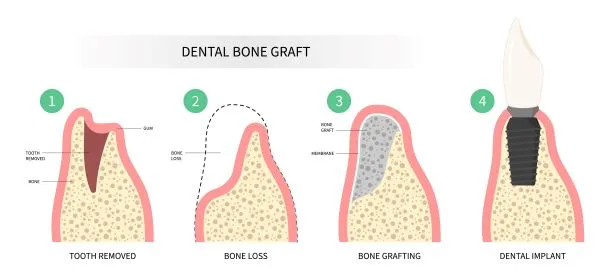
Bone grafting replaces or repairs missing or damaged bone in the jawbone or skull. Bone grafting may be performed to repair complex facial fractures or build up an area where bone loss has occurred due to atrophy or bone resorption after tooth loss.
THE IMPORTANCE OF TEETH FOR JAWBONE HEALTH
When one or more teeth are missing it can lead to bone loss at the site of the gap. This loss of jawbone can develop into additional problems, both with your appearance and your overall health. You may experience pain, problems with your remaining teeth, altered facial appearance, and eventually even the inability to speak and/or eat normally.
In the same way that muscles are maintained through exercise, bone tissue is maintained by use. Natural teeth are embedded in the jawbone and stimulate the jawbone through activities such as chewing and biting. When teeth are missing, the alveolar bone, or the portion of the jawbone that anchors the teeth into the mouth, no longer receives the necessary stimulation it needs and begins to break down, or resorb. The body no longer uses or “needs” the jawbone, so it deteriorates.
What are Some Consequences of Tooth and Jawbone Loss?
- Problems with remaining teeth, including misalignment, drifting, loosening, and loss
- Collapsed facial profile
- Limited lip support
- Skin wrinkling around the mouth
- Distortion of other facial features
- Jaw (TMJ or temporomandibular joint) pain, facial pain, and headaches
- Difficulty speaking and communicating
- Inadequate nutrition as a result of the inability to chew properly and painlessly
- Sinus expansion
Why Do I Have Jawbone Loss?
- Tooth Extractions: Missing teeth can lead to jawbone loss as the bone loses stimulation from chewing. Bone deterioration often begins within 18 months after extraction.
- Periodontal Disease: Infections of the gums destroy the supporting bone structures. Gingivitis can progress to periodontitis, causing bone loss and potential tooth loss if untreated.
- Dentures/Bridgework: Unanchored dentures do not stimulate the jawbone, leading to bone resorption. Some dentures are supported by anchors that help preserve bone. Bridgework may also lead to bone loss in the gap area.
- Trauma: Injuries like knocked-out teeth or jaw fractures can halt bone stimulation and lead to bone loss. Bone grafting may be needed to restore function.
- Misalignment: Misaligned teeth can cause bone deterioration due to lack of proper stimulation and abnormal physical forces.
- Osteomyelitis: A bacterial bone infection that reduces blood supply and requires antibiotics and potentially bone grafting for recovery.
- Tumors: Removal of tumors can necessitate bone grafting to restore jaw function. Malignant tumors may complicate grafting due to extensive removal.
- Developmental Deformities: Some conditions lead to missing teeth or bone, which can be corrected with bone grafting.
- Sinus Deficiencies: Loss of molars can cause the maxillary sinus to enlarge, leading to insufficient bone for dental implants. A sinus lift procedure can address this issue.
Minor Bone Grafting
Minor bone grafting is often required before dental implants are placed to build up the jawbone ridge. Missing teeth cause the bone surrounding the empty tooth socket to resorb (atrophy or deteriorate), leading to insufficient bone to support implants. Without bone grafts, the jawbone continues to deteriorate, causing the remaining teeth to shift and the face to appear sunken.
Bone grafting restores bone loss from resorption, providing a stable and strong foundation for implant restorations. The implant screws placed in the jawbone also stimulate the surrounding bone, preventing atrophy and preserving facial contours, ensuring a secure and stable outcome.
Bone grafting for dental implants, considered a minor procedure, is performed in our office. We ensure the patient’s comfort by performing the procedure while they are sedated, providing a pain-free surgical experience and a relaxed environment.
Major Bone Grafting
Major bone grafting is more complex and performed in a hospital setting. Recovery takes longer and usually requires a one- to three-day post-op hospital stay. Our surgeons perform a wide range of major bone grafting procedures to address bone loss due to accidents, sports injuries, gum disease, illnesses, and traumatic injuries. Injuries or defects of the jaw require major bone grafting for repair. These defects may be the result of traumatic injuries, tumor surgery, or congenital defects.
For major bone grafting, the bone can be obtained from a bone bank or the patient’s own body, usually from the hip or tibia. We may also use special membranes that dissolve under the gum to protect bone grafts and encourage bone regeneration. This technique, known as guided bone regeneration or guided tissue regeneration, is a key part of the bone grafting process, ensuring the best possible outcome for our patients.
Types of Bone Grafts
- Autogenous Bone Grafts: Made from your own bone (e.g., from the chin, jaw, leg, hip, or skull). These grafts promote bone growth and eliminate rejection risk but require a second procedure to harvest the bone.
- Allogenic Bone: Dead bone from a cadaver, processed to remove moisture. It acts as a scaffold for new bone growth but does not promote new bone formation on its own.
- Xenogenic Bone: Bone from another species (usually cows), processed to avoid immune rejection. It serves as a framework for surrounding bone to grow into the graft.
Bone Graft Substitutes
- Demineralized Bone Matrix (DBM)/Demineralized Freeze-Dried Bone Allograft (DFDBA): Processed bone with collagen and growth factors, available as powder, putty, chips, or gel.
- Graft Composites: Combinations of various materials and growth factors, such as collagen/ceramic composites or DBM with bone marrow cells.
- Bone Morphogenetic Proteins (BMPs): Natural proteins that help regulate bone formation and healing.
Synthetic materials avoid the need for a second procedure and can be effective alternatives to natural bone grafts. Dr. Fettig, Dr. Naumann, or Dr. Zemplenyi will select the most suitable option for your needs.